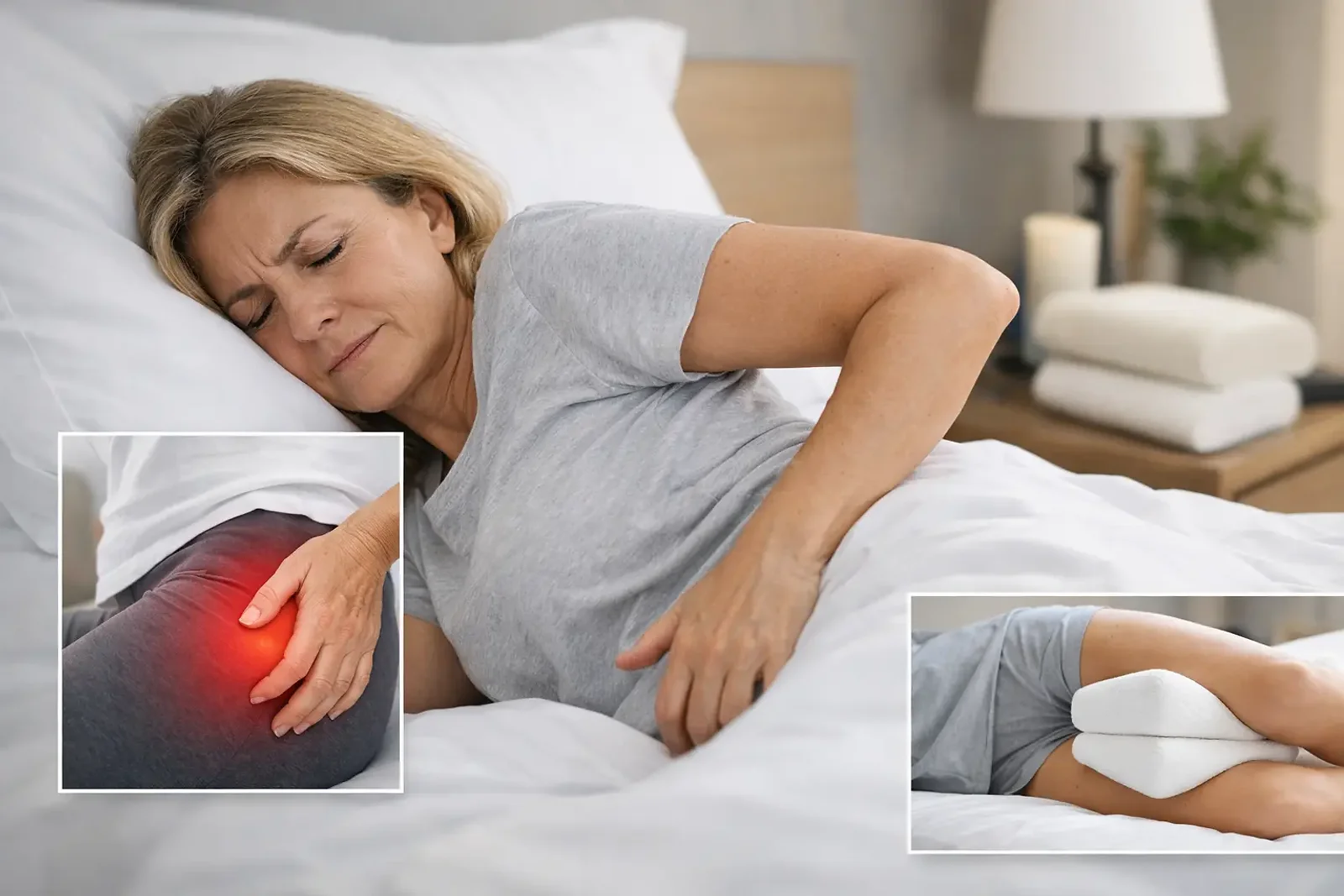
You finally get into bed, find a comfortable position, and then your hip starts complaining within minutes. Hip pain sleeping problems are one of the most common reasons people tell us they feel exhausted as well as sore. Poor sleep lowers your pain threshold, pain disrupts sleep, and the whole thing becomes a frustrating cycle.
The good news is that night pain does not always mean something serious, but it does usually mean something needs attention. Sometimes the issue is the hip joint itself. Sometimes it is irritated tendons on the outside of the hip, a stiff lower back, or even the way you are lying. Getting the cause right matters, because the best sleeping position for one type of hip pain can aggravate another.
Why hip pain often feels worse at night
During the day, movement can keep joints and soft tissues from stiffening up. At night, you are still for longer periods, and pressure builds on the same area. If your pain sits on the outside of the hip, lying directly on it can compress sensitive tendons and the bursa. If the pain comes from the joint, certain positions may pinch the front of the hip or leave it feeling stiff when you wake.
There is also less distraction at night. Minor pain that is manageable when you are walking, working or busy with family life can feel much louder when the house is quiet. That does not mean it is in your head. It simply means your body has less else to focus on.
Common causes of hip pain sleeping issues
Tendon pain on the outside of the hip
A very common cause is irritation of the gluteal tendons, sometimes grouped under greater trochanteric pain syndrome. This often causes pain over the outer side of the hip, especially when lying on that side. People often describe it as a deep ache or burning discomfort that builds after a few minutes in bed.
This is particularly common in women, runners, people who stand a lot, and anyone whose symptoms flare after increased walking, hills or exercise. It can also be linked with weakness around the hip and changes in how the pelvis is controlled during walking.
Hip joint irritation or arthritis
If the pain is more in the groin, front of the hip or deep inside the joint, the source may be the hip joint itself. Osteoarthritis, stiffness in the joint capsule, or other intra-articular problems can all become more noticeable after inactivity. Some people notice pain turning in bed, putting on socks, or first thing in the morning.
Joint-related pain can respond well to movement, strength work and load management, but the right plan depends on how irritable the symptoms are.
Referred pain from the lower back
Not all hip pain is truly hip pain. The lower back can refer pain into the buttock, side of the hip or thigh, and it often becomes more noticeable in bed. If you also get back pain, pins and needles, or symptoms that travel below the knee, the lumbar spine should be considered.
Less common but important causes
In some cases, night pain can be linked to inflammatory conditions, a stress injury, or more significant pathology. These are less common, but they are the reason persistent or unexplained night pain should not simply be ignored for months.
Best sleeping positions for hip pain
There is no single perfect position for everyone, but a few adjustments help many people straight away.
If you sleep on your side and the painful side is down, try switching sides if you can. Place a thick pillow between your knees and ideally down to your ankles so the top leg is supported properly. This reduces the amount the top leg drops across the body, which can ease compression on the outer hip.
If both sides are uncomfortable, sleeping on your back may be better for a while. A pillow under the knees can relax the hips and lower back, especially if you feel stiff or achy through the front of the joint.
Front sleeping is often the least helpful position for people with hip or back pain. It can hold the hips in a more twisted or extended position for hours and may increase strain through the front of the hip and the lower back. If you are a committed front sleeper, a pillow under the pelvis can sometimes reduce the stress, but changing position is usually the better option.
What to avoid if your hip hurts in bed
The biggest mistake we see is repeated compression of a sore outer hip. That means lying directly on the painful side, or on the opposite side with the top leg crossing over and dropping forwards. Both can keep a reactive tendon irritated.
It is also worth being careful with aggressive stretching late in the evening. If your hip pain is tendon-related, strong stretches across the body can actually increase compression and make night pain worse. A common example is pulling the knee across the body to stretch the buttock. It may feel satisfying at the time, but it is not always the right choice.
Very soft mattresses can also be a problem. If you sink too deeply, your pelvis may drop and twist, especially in side lying. That said, replacing a mattress is not the first step for most people. Pillows, position changes and the right treatment plan usually make more difference.
Simple things that can help before bed
A short walk, gentle movement, or a few tailored exercises can settle some hips better than complete rest. This depends on the cause. A stiff arthritic hip may like a bit of movement before bed. A highly irritable tendon may do better with calm, controlled exercises rather than long walks or repeated stairs late in the day.
Heat can help some people, particularly when stiffness is the main issue. Others prefer ice if the area feels hot and aggravated. Neither is a cure, but both can be useful for symptom control.
Pain relief may also have a role, provided it is appropriate for you and your pharmacist or GP is happy with it. If you are relying on regular medication just to sleep, though, it is sensible to get the problem assessed rather than hoping it will fade on its own.
When hip pain sleeping needs proper assessment
If your symptoms have lasted more than a couple of weeks, are waking you regularly, or are stopping you from lying on either side, it is worth getting an expert assessment. The same applies if you are limping, your mobility is reducing, or you are unsure whether the pain is coming from the hip, pelvis or back.
You should seek prompt medical advice if the pain is severe and unrelenting, follows a fall, comes with fever, unexplained weight loss, significant swelling, or leaves you unable to put weight through the leg. Constant night pain that is not changed by position is another reason not to delay.
A good assessment should look at more than the sore spot. Your hip movement, strength, walking pattern, lower back and daily demands all matter. This is where personalised treatment makes a real difference. Generic advice like sleep with a pillow or stretch your glutes can help some people, but it is often not enough when the wrong structure is being targeted.
How physiotherapy can help
With the right diagnosis, treatment becomes far more straightforward. For tendon-related pain, that may mean reducing compression, improving hip strength and controlling the loads that keep irritating the tissue. For joint pain, the focus may be on mobility, strength, pacing and restoring confidence in movement. If the back is contributing, treatment should address that too.
Hands-on treatment can be useful in the right cases, but it works best as part of a wider plan rather than a stand-alone fix. The aim is not just to make you more comfortable on the treatment couch. It is to help you sleep better, move better and stop the problem returning every time you increase activity.
At Atlas Physiotherapy Clinic, expert assessment is designed to give you clarity from the first appointment. That means understanding what is driving the pain, what is safe to do, what to avoid for now, and what a realistic recovery plan looks like for your body and lifestyle.
The key point with hip pain sleeping
Night pain is miserable, but it is also useful information. It tells us how your tissues respond to pressure, position and inactivity. Once the true source of the pain is identified, small changes in sleeping position and a tailored treatment plan can make a genuine difference. If your hip is keeping you awake, do not just keep changing pillows and hoping for the best. A clear diagnosis is usually the quickest route to a quieter night.
Written by
Connor Jayes
Chartered physiotherapist · HCPC PH110273 · Atlas Physiotherapy Clinic, Faversham