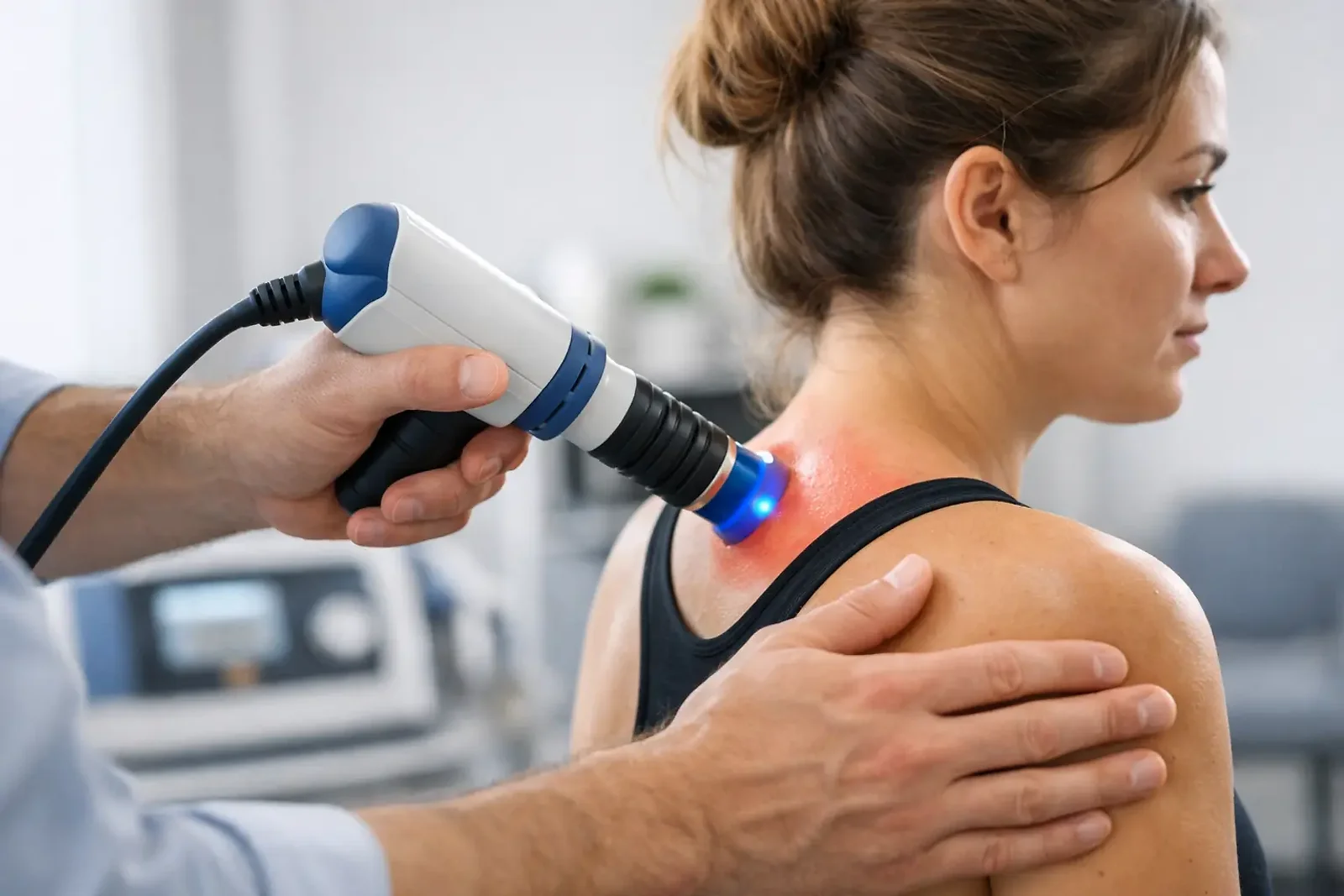
If you have been told shockwave therapy could help your heel pain, Achilles problem or stubborn tendon injury, one of the first questions is usually the most straightforward one - is shockwave therapy painful? It is a fair concern, especially if you are already sore and frustrated, and the honest answer is that it can feel uncomfortable during treatment, but it is usually very manageable.
For most people, shockwave therapy is not sharply painful in the sense of causing harm. It is more often described as intense, achy, tender or strange, particularly when the treatment head passes over an already irritated area. That matters, because there is a difference between a treatment feeling uncomfortable and a treatment being unsafe. In a properly assessed setting, the aim is to deliver enough stimulus to encourage healing without making the experience harder than it needs to be.
Is shockwave therapy painful during the session?
Shockwave therapy uses acoustic waves delivered into the injured tissue. It is commonly used for conditions such as plantar fasciitis, Achilles tendinopathy, patellar tendinopathy, tennis elbow and some shoulder tendon problems. These are often conditions that have been present for weeks or months, and they can be stubborn because the tissue is no longer healing efficiently on its own.
During the session, the sensation varies from person to person. Some patients feel a tapping or pulsing sensation with mild discomfort. Others notice a deeper ache, especially when the treatment reaches the most irritated point. If the tissue is very sensitive, the first minute can feel quite intense, but it often settles as the area adapts.
One of the biggest reasons people worry is the word shock. It sounds aggressive. In reality, treatment is controlled and adjusted to the individual. A good clinician does not simply turn the machine up and hope for the best. The settings, the area treated and the pace of the session should all be tailored to your symptoms, your diagnosis and how you respond on the day.
Why discomfort levels vary so much
There is no single answer because pain is not just about the machine. It depends on the condition, the stage of the injury and your own sensitivity.
A chronically irritated plantar fascia can be very tender to press on before treatment even starts, so adding shockwave to that area may feel more noticeable than treating a less reactive tendon. Achilles problems can also vary. Some people with a mid-portion Achilles tendinopathy tolerate it well, while others with insertional pain near the heel find the area more sensitive.
Your general pain threshold plays a part too, but that is not the whole story. If you are anxious, already flared up or have had pain for a long time, the nervous system can become more protective. That can make treatment feel stronger even when the settings are moderate. Equally, people who expect it to be awful sometimes find it much easier than anticipated.
The dose matters as well. Shockwave therapy should be part of a wider treatment plan, not a one-size-fits-all add-on. Starting at a sensible intensity and progressing appropriately usually leads to a better experience than trying to do too much too soon.
What does shockwave therapy actually feel like?
Most patients use practical language rather than dramatic language. They might say it feels like repeated taps, a concentrated thudding sensation or pressure into a bruised spot. If the injured area is particularly irritable, there can be short bursts of sharper discomfort when the applicator passes over the worst point.
That does not mean you should grit your teeth through unbearable pain. Treatment should be tolerable. In clinic, we usually want you to be able to stay relaxed, communicate clearly and finish the session feeling that it was challenging but manageable. If you are climbing off the couch tense, distressed or significantly worse, that is a sign the approach may need adjusting.
For many people, the anticipation is worse than the treatment itself. Once they understand what the sensation is and that it lasts only a short time, confidence tends to improve quickly.
Does pain after shockwave therapy mean something is wrong?
Not usually. Mild soreness after treatment is common. In fact, a temporary increase in symptoms for a day or two can happen, particularly after the first session. The area may feel tender, bruised or slightly more reactive than normal. That is often a normal response rather than a sign of damage.
What matters is the pattern. Short-lived soreness that settles is generally expected. Pain that is severe, escalating or still significantly worse several days later deserves review. This is one reason expert assessment is so important. Shockwave therapy is not suitable for every painful foot, ankle, elbow or shoulder problem, and getting the diagnosis right comes first.
Most patients can carry on with normal day-to-day activity after treatment, although very high-impact exercise may need to be modified depending on the condition being treated. You should leave with clear advice on what is normal, what to avoid and when to seek further guidance.
Can anything make shockwave therapy more comfortable?
Yes, and it often comes down to good communication and good clinical judgement. When treatment is explained properly, patients tend to cope better because they know what to expect. It also helps when the clinician builds up intensity gradually rather than starting too high.
Breathing normally and trying not to brace against the treatment can make a surprising difference. Tensing the area can make it feel sharper. The more relaxed you are, the easier it is to find a tolerable level that still does the job.
It is also worth remembering that the goal is not to chase pain. More intensity is not automatically better. Effective treatment sits in the space between too little stimulus and unnecessary aggravation. At Atlas Physiotherapy Clinic, that balance is guided by expert assessment, your symptoms and your response from one session to the next.
When shockwave feels more painful than expected
There are a few scenarios where treatment may feel stronger. The first is when the diagnosis is correct but the tissue is very irritated. A highly sensitive plantar fascia or calcific shoulder tendon can be sore even before contact, so treatment may need a careful start.
The second is when the surrounding area is also contributing. For example, someone with heel pain may also have calf tightness, altered loading or reduced ankle movement, which can keep the tissue under strain. If those factors are not addressed, the area may remain reactive and each session may feel tougher than it should.
The third is when shockwave is being used as a standalone fix for a problem that really needs a broader rehab plan. Tendon and fascia problems usually improve best when treatment is combined with load management, progressive exercise and clear advice. If the wider plan is missing, progress can stall and every symptom flare can feel more worrying.
Is it worth it if it is uncomfortable?
For the right condition, it often is. Many of the problems treated with shockwave therapy are the very issues that have not settled with rest alone, stretching alone or repeated stop-start rehab. If a treatment offers a realistic chance of reducing pain and improving healing in stubborn tissue, a short period of manageable discomfort can be a worthwhile trade-off.
That said, it is not a badge of honour. If someone cannot tolerate it, that does not mean they have failed, and it does not mean treatment cannot be adapted. There may be scope to alter the settings, change the treatment approach or prioritise another part of the plan first. Good care is not about forcing a patient through a protocol. It is about choosing the right treatment, at the right time, in the right way.
Questions to ask before starting treatment
If you are unsure, ask what condition is being treated, why shockwave is being recommended and what level of discomfort is considered normal. You should also ask how many sessions are likely to be needed, what you should do afterwards and what signs would suggest the plan needs reviewing.
A clear explanation does more than reassure you. It helps you decide whether the treatment makes sense for your goals, whether that is getting back to running, walking without heel pain, training comfortably again or simply moving through the day with less irritation.
The best shockwave appointments do not feel rushed. You should come away understanding not just what the machine does, but how it fits into your overall recovery.
If you are asking, is shockwave therapy painful, the most useful answer is this: it can be uncomfortable, especially over a sore tendon or fascia, but it should be controlled, tolerable and delivered as part of a personalised treatment plan. When that happens, most patients find it far less daunting than they expected - and more importantly, they know why they are having it and what to expect next.
Written by
Connor Jayes
Chartered physiotherapist · HCPC PH110273 · Atlas Physiotherapy Clinic, Faversham