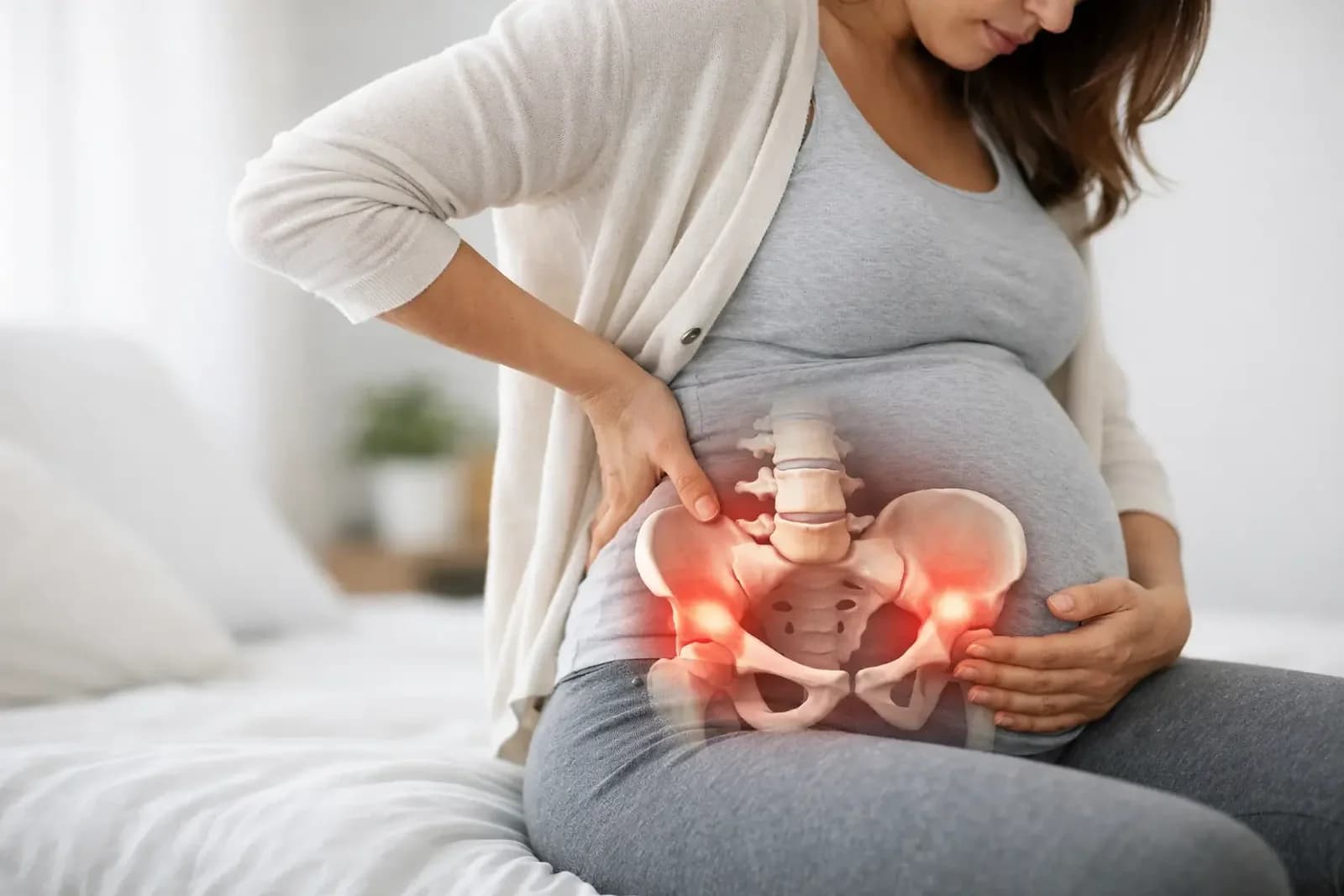
One day it feels like a mild ache across the front of your pelvis. The next, turning in bed, getting dressed or walking to the shops suddenly feels far harder than it should. Pregnancy related pelvic pain is common, but that does not mean you have to simply put up with it or guess your way through the next few months.
For many women, this pain can be worrying as much as it is uncomfortable. You may wonder whether it is normal, whether exercise will make it worse, or whether you should just rest more. The good news is that, with the right assessment and a personalised plan, symptoms can often be managed very effectively and everyday movement can feel much more manageable.
What is pregnancy related pelvic pain?
Pregnancy related pelvic pain is an umbrella term used to describe pain felt around the pelvis during pregnancy. It often affects the front of the pelvis around the pubic bone, the lower back, the buttocks, the groin, or a combination of these areas. Some women feel a sharp catching pain, while others describe a dull ache, heaviness or a sense of instability.
You may also hear it called pelvic girdle pain. In simple terms, it means the joints and muscles around the pelvis are not tolerating load and movement as well as they normally would. That can make everyday tasks such as rolling over in bed, climbing stairs, standing on one leg to get dressed or walking for longer periods feel surprisingly difficult.
Symptoms vary from person to person. For some, it is an irritation that comes and goes. For others, it has a much bigger effect on sleep, work, exercise and looking after other children.
Why does pregnancy related pelvic pain happen?
There is rarely one single cause. More often, it is a mix of hormonal, mechanical and physical factors happening at the same time.
During pregnancy, the body adapts to support your growing baby. Hormonal changes can influence ligament laxity, while changes in posture, weight distribution and abdominal support alter how force travels through the pelvis and lower back. Muscles that would usually help control movement may become less efficient, and tasks that used to feel automatic can start to overload sensitive joints and tissues.
Previous back pain, a history of pelvic pain, physically demanding work, higher levels of fatigue and reduced overall strength can all play a part. That said, some women develop symptoms with no obvious risk factors at all. It is not a sign that you have done something wrong, and it is not simply a matter of being fit or unfit.
What does it usually feel like?
Pain patterns are not identical, but there are some common themes. Many women report pain at the pubic bone, pain across one or both sides of the lower back, discomfort in the buttocks, or pain that spreads into the groin or inner thigh. Standing on one leg is often aggravating, so getting into trousers, stepping into the bath or going upstairs can be particularly uncomfortable.
Walking can become limited, especially later in the day. Turning in bed is a frequent problem and one of the most frustrating because it disrupts sleep when rest is already precious. Some women notice clicking or grinding sensations around the pelvis. Others feel more of a dragging or heavy sensation after activity.
Pain may be mild in the morning and worse by evening, or it may flare after busy days, long periods on your feet or awkward movements. This variation is one reason expert assessment matters. The exact pattern helps guide treatment.
When should you get assessed?
If pelvic pain is affecting how you move, sleep or manage daily life, it is worth getting it looked at sooner rather than later. Waiting in the hope that it will settle on its own can sometimes mean you become more restricted, more deconditioned and more anxious about movement.
A proper assessment helps answer the questions that matter most. Is this pelvic girdle pain, lower back pain, hip pain, or a mixture? What is making it worse? What can you safely keep doing? Which exercises are likely to help rather than irritate things?
You should also speak to your midwife, GP or maternity team promptly if pain is severe, constant, associated with bleeding, fever, reduced foetal movements, numbness, significant weakness, or bladder or bowel changes. Musculoskeletal pain is common in pregnancy, but it is still important to rule out other causes when symptoms do not fit the usual pattern.
How physiotherapy can help with pregnancy related pelvic pain
Physiotherapy should not feel like a generic leaflet and a few random stretches. The most effective care starts with an expert assessment of your symptoms, movement, day-to-day demands and stage of pregnancy.
At your appointment, we would look at how your pain behaves, which movements are aggravating it, how your pelvis and lower back are functioning, and where support or control may be lacking. That allows treatment to be shaped around you rather than around a one-size-fits-all diagnosis.
Treatment often includes advice on activity modification, hands-on treatment where appropriate, and carefully selected exercises to improve control, strength and confidence in movement. The aim is not to stop you moving. It is to help you move better, with less irritation and more certainty about what your body can tolerate.
That may mean practical strategies for rolling in bed, getting in and out of the car, managing stairs, adjusting work posture or pacing busy days. It may also include strengthening work for the hips, trunk and pelvic support muscles, alongside guidance on walking and exercise levels. For some women, a pelvic support belt can help, but it depends on the presentation and should be part of a broader plan rather than a fix on its own.
What you can do day to day
Small changes often make a meaningful difference. Try to avoid repeated movements that put you heavily onto one leg, especially when symptoms are flared. Sit down to get dressed if standing on one leg is painful. When getting out of bed or the car, keep your knees together and move as one unit rather than twisting sharply through the pelvis.
Pacing matters as well. A good day can tempt you into catching up on everything at once, only for symptoms to spike later. Steadier activity, with planned rests, is often more helpful than the boom-and-bust cycle of overdoing it and paying for it afterwards.
Exercise is still important, but it needs to be the right type and amount. Complete rest is rarely the answer. Gentle, targeted exercise can help maintain strength and reduce the sense of instability, but the wrong exercises at the wrong time may aggravate symptoms. That is why individual guidance is so useful.
What about work, exercise and looking after other children?
This is where advice has to be realistic. Telling a pregnant woman to simply rest more is not always practical if she has a job, a commute or a toddler to lift.
Instead, the focus should be on reducing unnecessary strain while keeping you functioning. That might mean breaking tasks into shorter blocks, changing lifting technique, avoiding prolonged standing where possible, or adjusting your workstation. If you are active and want to keep exercising, that is often possible, but your programme may need adapting. Swimming may feel better than walking for some, while others tolerate cycling or strength work well. It depends on what provokes your symptoms and what stage of pregnancy you are in.
The goal is not perfection. It is finding ways to keep life manageable without repeatedly winding symptoms up.
Will it go away after birth?
For many women, symptoms improve after delivery as the physical demands of pregnancy change. However, that is not true in every case. Some women continue to have pelvic pain postnatally, especially if symptoms were significant during pregnancy or if there are ongoing strength, movement or load management issues.
This is one reason not to dismiss pelvic pain as something you just need to endure. Early support can make pregnancy more comfortable now and may also help reduce the chance of symptoms lingering afterwards.
If pain continues after birth, or returns when you start becoming more active again, postnatal physiotherapy can help rebuild strength, improve pelvic and trunk control, and guide a gradual return to walking, lifting, exercise and childcare demands.
Getting the right help
Pregnancy can be physically demanding even without pain layered on top. If pelvic symptoms are making everyday movement harder, clearer answers and a personalised treatment plan can make a real difference. At Atlas Physiotherapy Clinic, expert assessment is designed to give you just that - a clear understanding of what is happening, what can help, and how to keep you moving as confidently as possible.
You do not need to wait until symptoms become severe to ask for help. Often, the earlier you address pregnancy related pelvic pain, the easier it is to calm things down and keep you doing the things that matter most while your body continues to adapt.
Written by
Connor Jayes
Chartered physiotherapist · HCPC PH110273 · Atlas Physiotherapy Clinic, Faversham