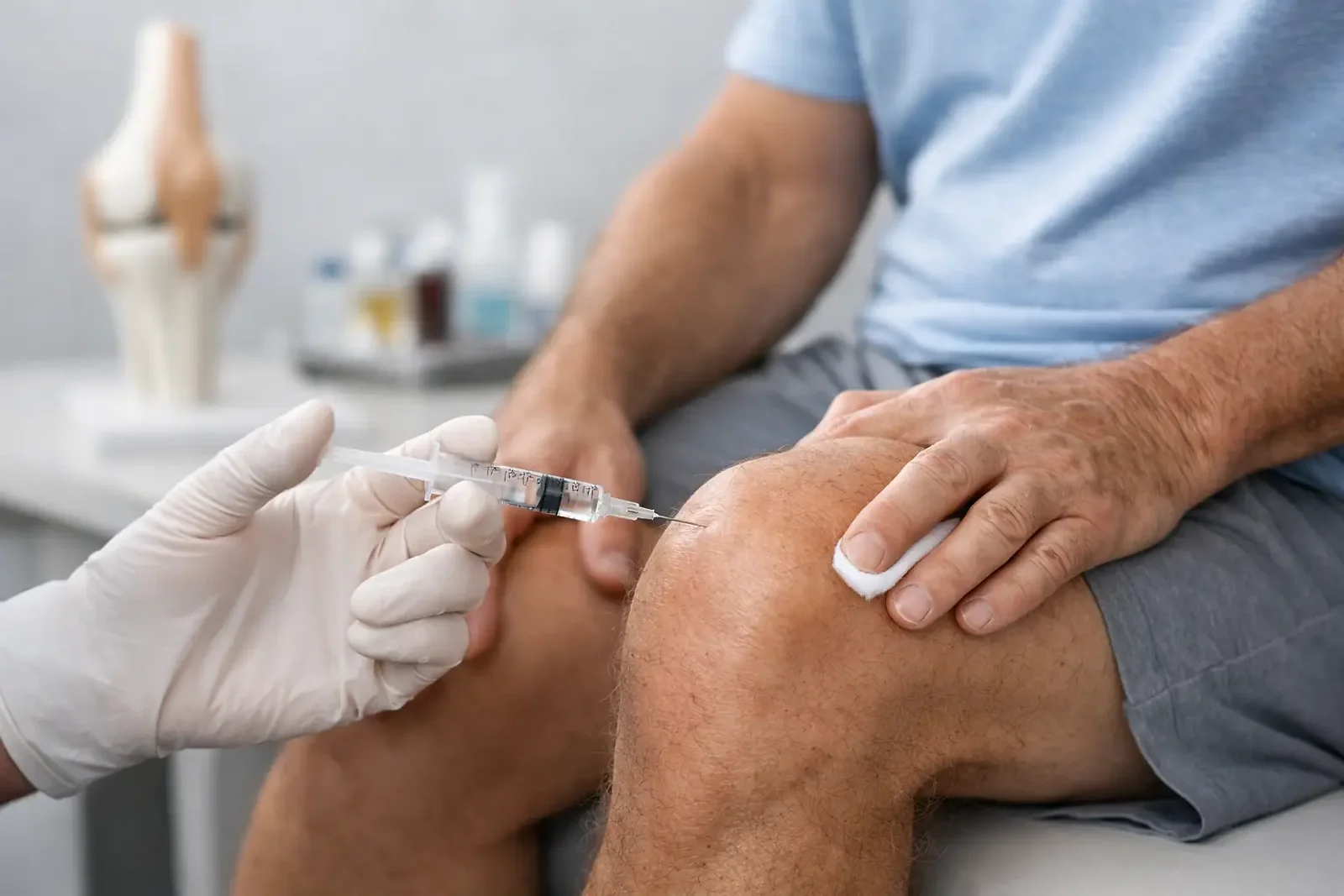
Joint pain has a way of shrinking everyday life. Stairs become a negotiation, a dog walk feels longer than it should, and even getting comfortable at night can turn into a challenge. When rest, exercise and pain relief have not done enough, injection therapy for joint pain can be a useful next step - but only when it is chosen for the right reason and as part of a clear treatment plan.
At Atlas Physiotherapy Clinic, the focus is not simply on reducing pain for a few weeks. It is on understanding what is driving your symptoms, whether an injection is likely to help, and how to combine that treatment with the right rehabilitation so you can move with more confidence again.
What is injection therapy for joint pain?
Injection therapy for joint pain involves placing medication into or around a painful joint to help calm inflammation, ease irritation and create a window for better movement. Depending on the condition, the aim may be to settle a flare-up, improve day-to-day comfort or make rehabilitation more manageable.
The most common type used for joint pain is a corticosteroid injection. This is designed to reduce inflammation in structures such as the shoulder, knee, hip or smaller joints. In the right situation, it can bring meaningful relief. That said, it is not a cure for every problem, and it works best when the diagnosis is accurate.
This is where expert assessment matters. Joint pain can come from arthritis, irritation inside the joint, surrounding tendons, referred pain from the spine, or a combination of factors. If the source of pain is misunderstood, an injection may offer little benefit or only short-lived change.
When injection therapy may help
An injection is not usually the first answer for every aching joint. In many cases, symptoms improve well with physiotherapy, activity modification and time. But there are situations where an injection can be genuinely helpful.
It may be considered if pain is stopping you from sleeping, limiting work or daily activities, or preventing you from progressing with rehabilitation. It can also be useful when a joint has become persistently inflamed and simpler measures have not settled it. For some people, the main benefit is not just less pain. It is being able to walk more normally, return to exercise or start strengthening work that was too uncomfortable before.
Common examples include certain types of shoulder pain, knee osteoarthritis flare-ups, painful inflammatory irritation around a joint, and some hip-related symptoms. The detail matters, though. Two people with "knee pain" may need very different treatment depending on what is actually happening in the joint and surrounding tissues.
When injection therapy for joint pain may not be the best option
There are also times when an injection is not the right route. If pain is being driven mostly by weakness, poor load tolerance, referred symptoms or mechanical overload, an injection may not address the real issue. It might reduce pain temporarily without changing why the problem developed.
There are medical factors to weigh up as well. Injections are not suitable for everyone, particularly if there is infection, certain medication considerations, uncontrolled diabetes or other clinical reasons why caution is needed. Repeated injections into the same area are not always advisable either. More is not always better, and part of good care is being honest about that.
This is why a no-pressure assessment is so valuable. Good decision-making starts with listening to your symptoms, examining the joint properly and talking through the likely benefits, limitations and alternatives.
What happens before the injection?
A proper appointment should not feel rushed. Before any injection is offered, there should be an expert assessment, a discussion of your symptoms, your medical history and your goals. You should understand what the likely diagnosis is, why an injection is being considered, and what other options exist.
Sometimes the best outcome from an assessment is clarity that you do not need an injection at all. If physiotherapy, shockwave therapy, exercise-based rehabilitation or a change in training load is more appropriate, that should be said clearly. The goal is personalised treatment, not pushing a procedure.
If an injection is suitable, you should also be told what medication is being used, what the likely response will be, and what aftercare is needed. That kind of plain-English explanation helps people make informed decisions rather than feeling they are simply being told what to do.
What does the procedure involve?
For most patients, the procedure itself is straightforward and relatively quick. The area is identified carefully, cleaned, and the injection is administered using appropriate clinical technique. Some joints or regions can feel more sensitive than others, but most people tolerate the process well.
You may feel some discomfort during or after the injection, and there can occasionally be a short-lived increase in pain before things settle. This does not necessarily mean anything has gone wrong. It is one reason aftercare advice matters.
The response time varies. Some people notice improvement within a few days, while others take a bit longer. Relief is not always immediate, and the degree of benefit can differ from person to person.
How long does it last?
This is one of the most common questions, and the honest answer is that it depends. The benefit of injection therapy for joint pain is influenced by the diagnosis, the severity of the condition, how irritated the tissues are, your activity levels and what happens after the injection.
For some, pain relief lasts long enough to make a real difference to sleep, work and exercise. For others, the effect may be modest or temporary. That does not make the treatment a failure if it creates a useful opportunity to restore movement, improve strength and reduce flare-ups through rehabilitation.
An injection should usually be seen as one part of the plan rather than the whole plan. If the joint is painful because it is stiff, weak or overloaded, those issues still need addressing.
Why rehabilitation still matters
This is the part many patients are not told clearly enough. If pain settles but nothing changes in the way the joint moves or copes with activity, symptoms can return. That is why combining injection therapy with physiotherapy often gives the best overall outcome.
Once pain is more manageable, it is often easier to build strength, improve mobility and address the habits or movement patterns that have been aggravating the area. In practical terms, that may mean returning gradually to running, getting back to lifting your child without hesitation, or simply being able to stand up from a chair without bracing yourself first.
A personalised rehabilitation plan also helps set realistic expectations. Some joints recover quickly. Others improve more gradually, especially when arthritis or long-standing irritation is involved. Clear guidance reduces the stop-start cycle that so many people fall into after a painful flare-up.
Risks, side effects and sensible expectations
Like any medical treatment, injections come with potential risks and side effects. These are usually discussed in advance and need to be weighed against the likely benefits. Possible issues can include temporary soreness, a post-injection flare, skin or soft tissue changes in some areas, and a small risk of infection.
It is also worth saying that a successful injection does not always mean the pain will disappear completely. Sometimes the outcome is that symptoms become tolerable enough to let you move better and get back on track. That can still be a very worthwhile result.
The best results often come when expectations are realistic. If you are hoping for a quick fix with no further rehab, you may be disappointed. If you see the injection as a way to reduce pain and support a broader recovery plan, it tends to be a much more useful tool.
Is injection therapy for joint pain right for you?
The right candidate is someone with a clear diagnosis, symptoms that fit the treatment, and a genuine reason to consider it. That might be persistent pain despite appropriate rehabilitation, a flare-up that is stopping progress, or joint irritation that is limiting normal life more than it should.
It is less about chasing a procedure and more about choosing the treatment that matches the problem. For some patients, an injection is the step that helps everything move forward. For others, expert physiotherapy and a structured plan are the better answer.
If you are unsure, start there. Get the joint assessed properly, ask questions, and make sure the plan makes sense for your body, lifestyle and goals. The most effective treatment is not always the most dramatic one. Often, it is the one chosen carefully, explained clearly and followed up with the right support.
Pain can make you feel stuck, but it does not have to stay that way. With the right assessment and a treatment plan built around you, there is usually a sensible next step.
Written by
Connor Jayes
Chartered physiotherapist · HCPC PH110273 · Atlas Physiotherapy Clinic, Faversham