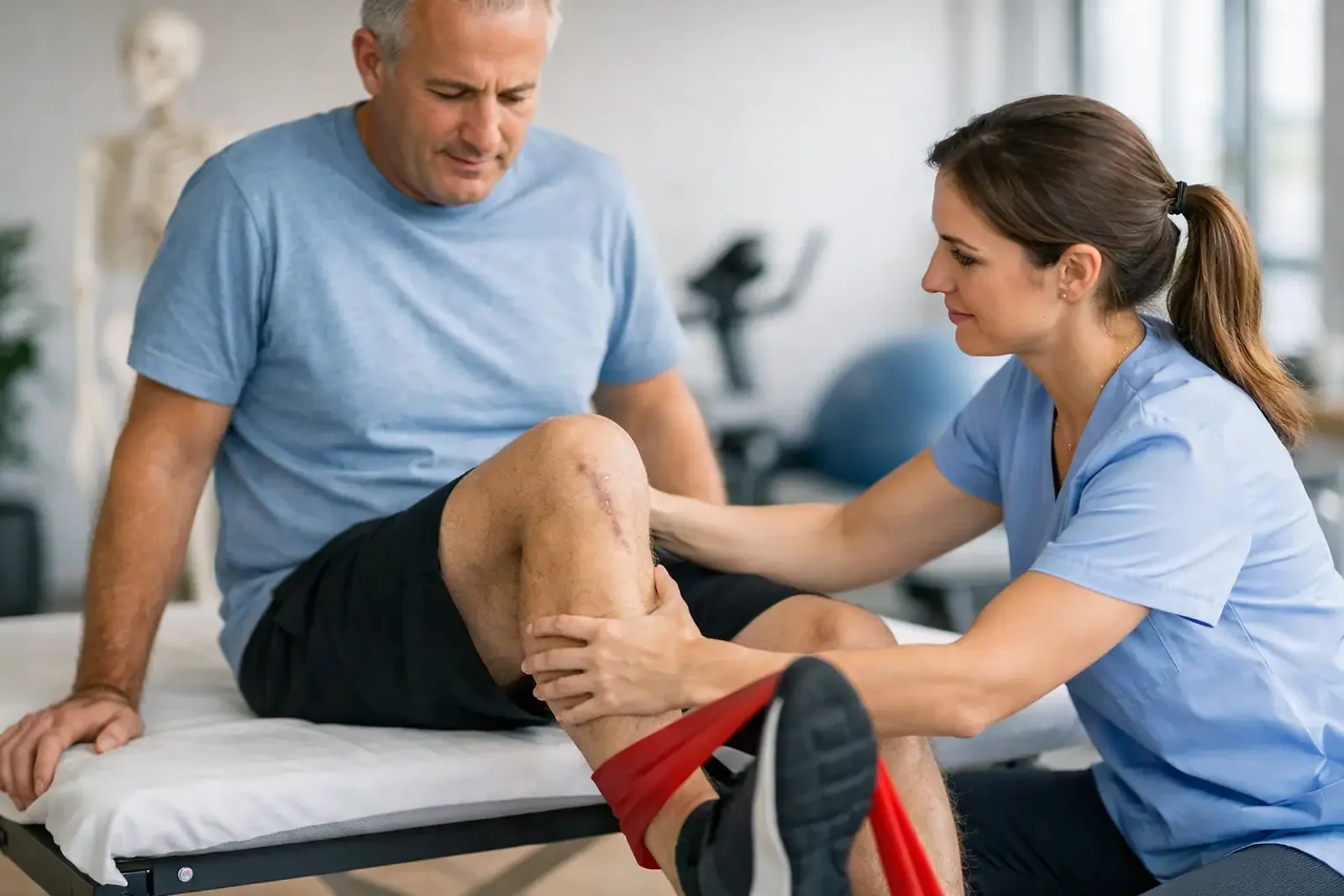
The first few weeks after a knee operation can feel oddly uncertain. You may have been told the surgery went well, yet the knee is swollen, stiff and nowhere near ready for normal life. That is exactly where physiotherapy after knee surgery becomes so valuable - not as an optional extra, but as the process that helps you turn a successful operation into a functional recovery.
Whether you have had an ACL reconstruction, meniscal surgery, cartilage procedure, patellar stabilisation or a knee replacement, the same question usually follows: when can I trust my knee again? The answer depends on the type of surgery, your baseline strength, your pain levels and your goals, but one thing is consistent. A structured rehabilitation plan gives you the best chance of regaining movement, confidence and day-to-day function safely.
Why physiotherapy after knee surgery matters
Surgery can repair damaged tissue, improve joint mechanics or reduce pain, but it does not automatically restore strength, balance or movement quality. After an operation, the body often responds with swelling, muscle inhibition and protective stiffness. The quadriceps in particular can switch off surprisingly quickly, which affects walking, stairs and general knee control.
This is why early rehabilitation matters. Good physiotherapy is not about pushing through pain for the sake of it. It is about assessing what your knee can currently tolerate, helping swelling settle, restoring range of movement and rebuilding the right strength at the right time. Done well, it reduces the risk of compensations that can slow recovery or create new problems elsewhere, such as hip pain, calf tightness or back discomfort.
It also provides something many patients need just as much as exercises: clarity. A lot of post-operative frustration comes from not knowing what is normal. Some pain is expected. Some stiffness is expected. Fatigue is common. What matters is understanding the difference between a knee that is working hard and one that is not coping well.
The early stage: calming the knee and restoring movement
In the first phase after surgery, the priority is usually to protect healing tissues while preventing avoidable loss of movement and muscle function. The exact restrictions vary. A simple arthroscopy is very different from a ligament reconstruction or full knee replacement, so your rehabilitation should always reflect the procedure and the surgeon's guidance.
At this stage, treatment often focuses on swelling management, improving knee extension and flexion, reactivating the quadriceps and helping you walk as normally as possible. That may sound basic, but these foundations are not small details. If the knee remains very swollen or you struggle to fully straighten it, later stages of rehabilitation often become harder.
Hands-on treatment can help in some cases, particularly where pain, guarding or patellar stiffness are limiting progress. Equally important is being shown how to move well at home. Simple drills done little and often are usually more effective than one overly ambitious session followed by a flare-up.
This is also the stage where expectations need to be realistic. The aim is not to make the knee feel perfect in a fortnight. The aim is to create steady, measurable progress without irritating the joint or compromising healing.
Building strength without rushing it
Once pain and swelling begin to settle and movement improves, the focus shifts towards strength and control. This is where many people feel impatient. They are walking better, the surgical wounds have healed and they understandably want to get back to work, the gym, long walks or sport. But the knee may still be weaker and less resilient than it looks.
Physiotherapy after knee surgery is not one-size-fits-all
A strong rehabilitation plan should reflect the surgery you have had and the life you want to return to. Someone recovering from a total knee replacement may need support with stairs, balance, getting up from chairs and improving walking tolerance. Someone recovering from ACL surgery may eventually need plyometric work, landing drills, change-of-direction training and return-to-running criteria.
That is why generic exercise sheets often fall short. Two patients can have the same operation and progress very differently based on age, training history, swelling response, confidence and other health factors. Personalised treatment plans matter because progression should be earned, not guessed.
In practice, strengthening usually starts with controlled exercises that the knee can tolerate well and then gradually becomes more demanding. Load, depth, speed and complexity are all adjusted over time. The goal is not just stronger muscles in isolation, but better control through real-life tasks such as walking, squatting, stepping and changing direction.
What good rehab should include
A proper post-operative programme should do more than count repetitions. It should link each stage of recovery to a clear purpose.
In the early weeks, that usually means reducing swelling, restoring extension, improving bend and normalising gait. In the middle phase, the focus often shifts to strength, single-leg control, balance and tolerance to everyday activity. In later stages, especially after sports surgery, rehab should test power, confidence and movement quality under greater demand.
Progress should be reviewed regularly rather than assumed. If your knee keeps swelling after modest exercise, if extension remains limited, or if you feel unstable despite doing the programme, those are signs your plan may need adjusting. Sometimes the issue is under-loading. Sometimes it is over-loading. Sometimes the exercises are simply not specific enough.
An expert assessment helps identify what is actually holding you back. That may be quadriceps weakness, reduced patellar mobility, poor hip control, apprehension with weight-bearing or a mismatch between your current exercises and your real-world goals.
Common concerns after knee surgery
Patients often worry that pain means damage. Sometimes it does signal irritation, but not every ache is a setback. Healing tissues can be sensitive, and muscles that have deconditioned can feel sore when they start working again. The pattern matters more than the presence of discomfort alone.
Persistent swelling, a clear loss of movement, worsening limp or pain that escalates for days after exercise deserves closer attention. Mild discomfort during rehabilitation that settles quickly is often part of the process. This is where specialist guidance is helpful, because it stops you from becoming either overly cautious or overly aggressive.
People also commonly ask how long recovery takes. The honest answer is that it depends. A minor arthroscopic procedure may settle relatively quickly, while ligament reconstruction and knee replacement recovery can continue for many months. There is no prize for rushing. The better goal is to keep moving forwards with the right milestones in place.
Returning to work, exercise and sport
One of the biggest benefits of structured physiotherapy is that it gives recovery context. Most patients are not trying to achieve perfect textbook movement for its own sake. They want to drive comfortably, get through a workday, kneel in the garden, walk the dog, keep up with family life or return to training without second-guessing every step.
That return should be guided by function, not just time since surgery. You may be six weeks post-op, but if your knee is still swollen and your strength is poor, pushing on because the calendar says so rarely ends well. Equally, some patients hold back unnecessarily because nobody has explained what they are ready for.
A good physiotherapist bridges that gap. They assess how your knee is coping, progress you appropriately and explain what signs suggest readiness for the next stage. For active adults and recreational athletes, this can make the difference between a confident return and a cycle of repeated flare-ups.
At Atlas Physiotherapy Clinic, this kind of rehabilitation is built around expert assessment and personalised treatment planning, so patients understand both where they are now and what needs to happen next.
When to seek extra help
If you feel stuck, there is value in getting your knee assessed rather than hoping it will sort itself out. Recovery does not need to be dramatic to need support. Sometimes the issue is as simple as poor exercise progression or uncertainty around what level of pain is acceptable.
Specialist input can be particularly useful if you are struggling to regain full movement, still relying heavily on pain relief, feeling unsteady on the leg, or unsure how to progress back to activity safely. It can also help if your goals are more demanding, such as returning to tennis, football, running or physically active work.
The right plan should leave you feeling informed, supported and appropriately challenged. Not overwhelmed, and not fobbed off with generic advice.
Recovering from knee surgery is rarely a straight line, but it should feel like a guided process rather than guesswork. With the right support, progress becomes easier to measure and much easier to trust - and that confidence is often what helps people start moving like themselves again.
Written by
Connor Jayes
Chartered physiotherapist · HCPC PH110273 · Atlas Physiotherapy Clinic, Faversham