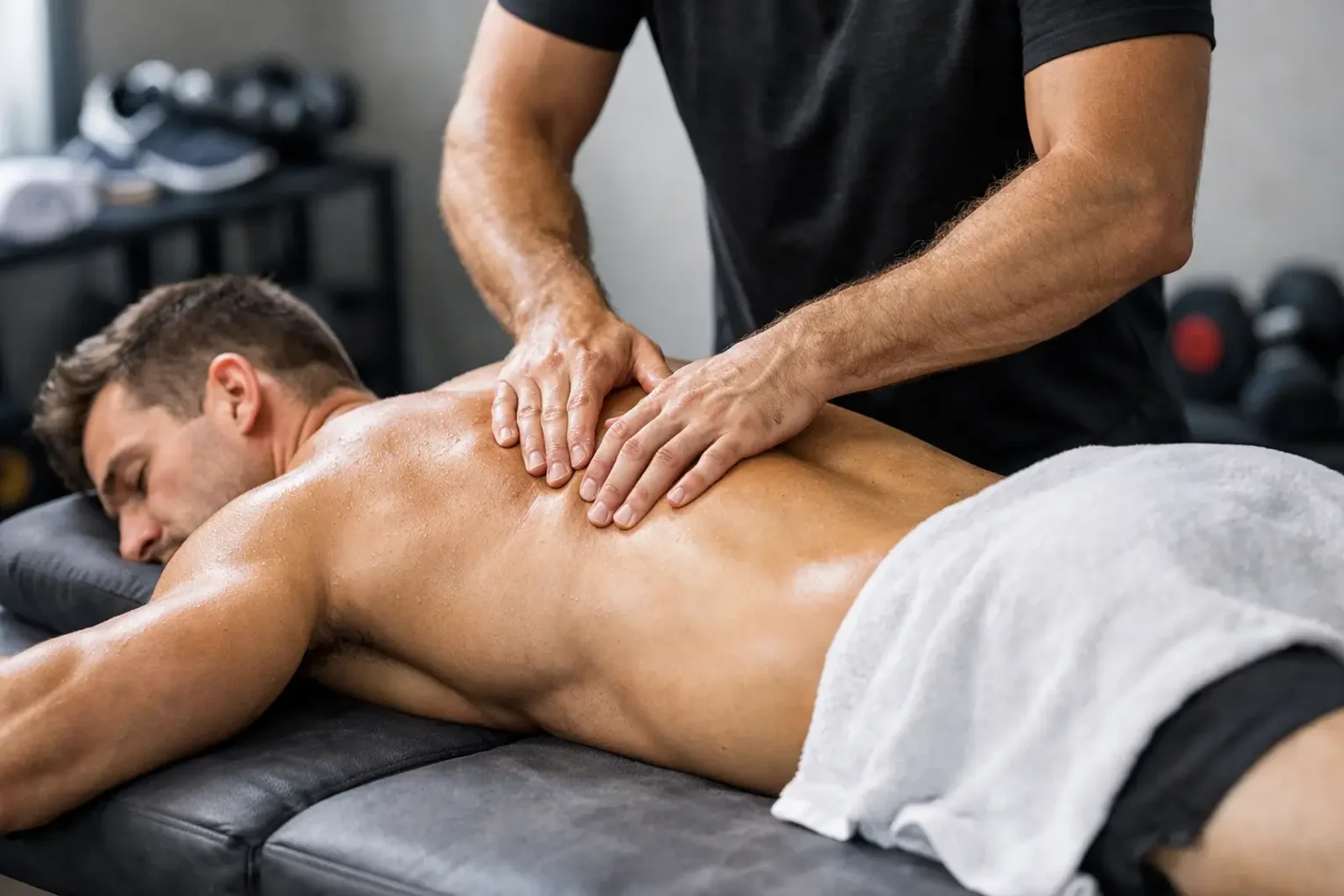
That feeling when a calf stays knotted for days, your shoulders sit up by your ears, or your hamstring never quite loosens after a run is frustrating. Sports massage for tight muscles is often one of the first treatments people consider, and for good reason. Done well, it can reduce tension, improve movement and help you feel more comfortable in your body. But it is not simply a case of pressing harder and hoping for the best.
Tightness can mean different things. Sometimes it is a true muscle overload after training, gardening, lifting at work or a long period at a desk. Sometimes it is your body protecting an irritated joint, tendon or nerve. That is why the best results come from treatment that looks at the whole picture, not just the sore spot.
What sports massage for tight muscles actually does
Sports massage is a hands-on treatment aimed at improving how soft tissues move and tolerate load. In plain English, it is used to settle down areas that feel stiff, overworked or restricted, while helping the body recover from activity and everyday strain.
For some people, the main benefit is short-term relief. A tight neck may ease enough to make driving, working or sleeping more comfortable. For others, it is about restoring movement so they can squat, run, cycle or train without feeling constantly limited. It can also help people who are not sporty at all. Tight muscles are just as common in office workers, busy parents and anyone spending long hours in one position.
What sports massage does not do is magically remove the cause of every ache. If your calf keeps tightening because your ankle is stiff, your training load has jumped too quickly or you are changing the way you walk due to back pain, massage alone may only provide temporary relief. That does not make it unhelpful. It simply means treatment works best when it is part of a personalised plan.
Why muscles feel tight in the first place
Muscle tightness is often treated as a simple mechanical problem, but the reality is more nuanced. Yes, tissues can become sensitised and feel physically stiff after heavy use or long periods of inactivity. But the sensation of tightness is also influenced by fatigue, stress, previous injury, movement habits and how well your body is recovering.
A runner may feel recurring tight calves because they have increased mileage too quickly. A desk-based worker may develop tight upper traps and chest muscles from hours spent hunched over a laptop. A new parent may notice back and hip tension from lifting, feeding and carrying in awkward positions. In other cases, what feels like muscle tightness may actually be referred pain from the spine or irritation around a tendon.
This matters because the right treatment depends on the reason behind the tightness. Strong hands are not a diagnosis. Expert assessment helps work out whether sports massage is the right starting point, or whether another treatment approach would be more useful.
When sports massage can help most
Sports massage is particularly helpful when muscles feel overworked, heavy or restricted after physical activity, repetitive tasks or prolonged postures. It can be useful for tight hamstrings, calves, glutes, hip flexors, shoulders and upper back, especially when those areas are affecting your ability to move normally.
It can also work well alongside rehabilitation. If you are rebuilding strength after an injury, massage may help settle protective tension that is making exercise harder than it needs to be. For people returning to sport, it can support recovery between sessions and improve confidence in movement.
There is a timing element too. If a muscle is very acutely injured, inflamed or bruised, hands-on work may need to be adapted or delayed. If symptoms include tingling, numbness, marked weakness or pain that travels, a more detailed assessment is sensible before anyone starts treating it as simple tightness.
What to expect in a sports massage appointment
A good appointment should not begin with you lying face down in silence while someone gets to work. It should start with a conversation. You should be asked where the tightness is, how long it has been there, what makes it worse, what you need to get back to, and whether there are signs that something more complex is going on.
From there, treatment is tailored. That may include deeper soft tissue techniques, trigger point work, stretching, assisted movement and advice on what to do afterwards. The pressure used should suit the tissue, the area being treated and your tolerance. More pressure is not always better. In fact, if treatment is too aggressive, it can leave tissues more irritated and make recovery harder rather than easier.
Sports massage sits within a broader musculoskeletal service, which means treatment can be informed by expert assessment rather than guesswork alone. That is particularly helpful when tightness has become repetitive, is linked to injury, or is stopping you from returning to normal activity.
Does sports massage hurt?
This is one of the most common questions, and the honest answer is: sometimes it can feel intense, but it should be manageable. There is a difference between therapeutic discomfort and feeling like you are bracing against the treatment.
Most people respond better when pressure is firm but controlled, with clear communication throughout. If you are tensing up, holding your breath or counting the seconds until it ends, the treatment may be too much. Effective sports massage is not about proving how much pain you can tolerate. It is about using the right technique to get the best response from the tissue.
You may feel a little sore afterwards, rather like after a hard training session, but that should settle. Many people also notice they move more freely straight away or over the next day or two.
Sports massage for tight muscles versus stretching
People often ask whether they should book a massage or just stretch more. Usually, it is not one or the other. They do different jobs.
Sports massage can help reduce the feeling of tension and improve how easily an area moves in the short term. Stretching and strengthening help you keep those gains and address why the tightness keeps returning. If your hips always feel tight because you sit all day and rarely load them through their full range, a massage may help, but better movement habits and specific exercises are what tend to make the change last.
That is why a combined approach is often best. Hands-on treatment creates an opportunity. Rehab and advice help you hold on to it.
When tight muscles need more than massage
There are times when recurring tightness is a sign that something else needs attention. If you keep getting the same problem despite stretching, foam rolling and regular massage, it is worth asking why. Ongoing calf tightness might be linked to ankle stiffness, tendon overload or altered running mechanics. Persistent neck and shoulder tightness may be driven by stress, workstation set-up or headaches coming from the neck. Hamstring tightness can sometimes be linked to the lower back rather than the hamstring itself.
This is where specialist assessment adds real value. Rather than chasing symptoms, it helps identify the structures involved, the loads your body is tolerating and the reason the area keeps flaring up. From there, treatment can be more precise and more effective.
How to get the most from treatment
A sports massage is more useful when it is matched to your goals. If you are training for an event, treatment timing matters. If you are sore from work and want to move more comfortably, your home advice may look very different. If you are recovering from injury, massage should complement your rehab, not replace it.
Simple things make a difference after treatment. Keep gently moving, stay hydrated, and avoid judging the result in the first hour alone. Some people feel immediate relief. Others notice the change more clearly the next day. If your tightness is long-standing, one session may help, but repeated treatment combined with exercise and load management is often what shifts the pattern.
The main thing is not to normalise constant tightness. Muscles can work hard without feeling permanently bound up. If they are always pulling, gripping or limiting you, there is usually a reason.
A sensible next step is not to keep battling through it or booking the same generic massage every few weeks and hoping this time it sticks. Get it properly assessed, understand what is driving it, and choose treatment that fits your body, your routine and your goals. Relief is helpful, but clarity is often what gets people moving well again.
Written by
Connor Jayes
Chartered physiotherapist · HCPC PH110273 · Atlas Physiotherapy Clinic, Faversham