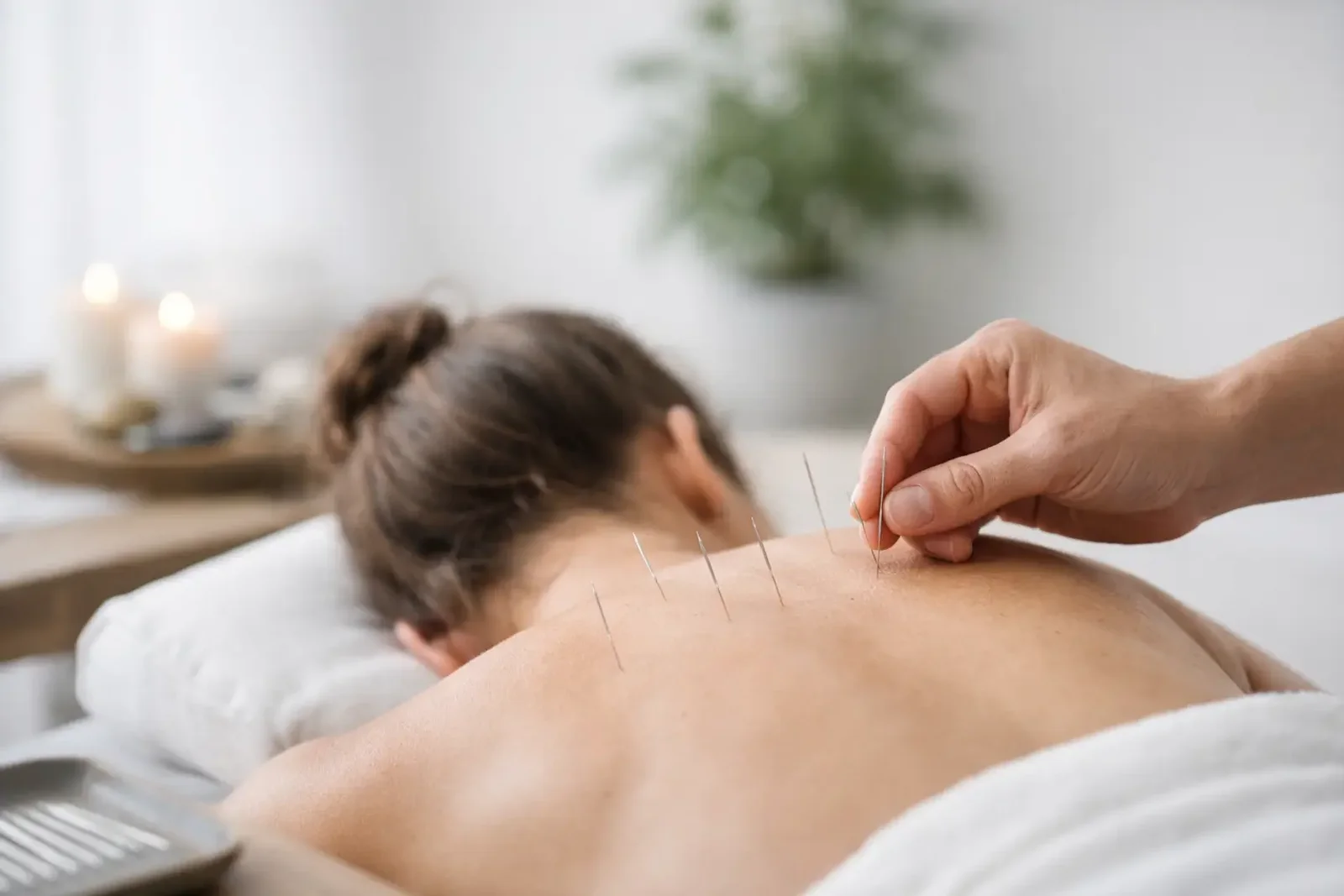
How acupuncture for chronic pain is used in practice
In a musculoskeletal setting, acupuncture is typically used to help calm pain, reduce muscle tension and make movement more manageable. It is often considered when symptoms have persisted beyond the expected healing window, or when pain is affecting sleep, work, exercise and confidence in movement.
Chronic pain is rarely just about one irritated tissue. Over time, the nervous system can become more sensitive, muscles may tighten around the painful area, and normal movement patterns often change. That is why ongoing pain can feel disproportionate to the original injury, or continue even after a scan shows only mild findings.
Acupuncture may help by influencing pain signalling, encouraging local blood flow and prompting a relaxation response in tight, protective muscles. Some people notice a reduction in pain quite quickly. Others find the main benefit is that they can move more freely afterwards, which then makes exercise-based rehab easier and more effective.
This matters because for most long-term conditions, the real goal is not simply to mask symptoms for a day or two. It is to create a window where the body can tolerate better movement, loading and recovery.
What conditions may respond well
Acupuncture is commonly used for a range of persistent musculoskeletal problems. These include ongoing neck pain, back pain, shoulder pain, tennis elbow, hip pain and knee pain, as well as pain linked to muscle overactivity or trigger points.
It can also be useful when pain has become stubborn after a sporting injury, a flare-up of osteoarthritis, or a period of reduced activity. Some patients seek it because they feel stuck between trying to push through discomfort and avoiding movement altogether.
That said, not every type of chronic pain responds in the same way. If symptoms are being driven by significant joint damage, inflammatory disease, nerve compression or a condition that needs medical investigation, acupuncture may only play a supporting role. In those situations, expert assessment matters far more than choosing a treatment based on hope alone.
What acupuncture actually feels like
A common concern is whether acupuncture is painful. Most people are surprised by how little they feel when the needles are inserted. The needles used in clinical acupuncture are extremely fine, much thinner than the sort used for injections or blood tests.
You may feel a mild ache, warmth, heaviness or tingling around the area. Sometimes there is a twitch in a tight muscle, which can feel odd rather than painful. Many patients find the treatment deeply relaxing, while others simply notice that the area feels looser afterwards.
There can be mild temporary soreness, and occasionally a small bruise, but treatment is usually very well tolerated. If you are nervous, that should be discussed openly. A good clinician will explain exactly what is planned and adjust the approach to your comfort level.
Why assessment still comes first
One of the biggest mistakes with long-term pain is jumping straight to treatment without properly understanding the problem. Acupuncture should not replace a detailed musculoskeletal assessment. It should follow one.
When pain has lasted for weeks or months, there may be several factors involved at once. Reduced strength, stiffness, poor load tolerance, altered movement habits, work demands, poor sleep and previous injuries can all keep symptoms going. If those factors are missed, even a treatment that gives short-term relief may not produce lasting change.
That is why acupuncture tends to work best when it sits inside a wider treatment plan. In practice, that may include hands-on therapy, advice on pacing and flare-up management, targeted strengthening, mobility work and a clear explanation of what is driving the pain.
At Atlas Physiotherapy Clinic, that sort of joined-up approach is central. The aim is not simply to offer a treatment, but to match the right treatment to the right patient at the right stage of recovery.
Acupuncture for chronic pain is not magic - and that is a good thing
People are often put off by two extremes. On one side, acupuncture is presented as a miracle answer. On the other, it is dismissed as pointless if it does not cure the problem outright. Neither view is especially helpful.
For chronic pain, realistic expectations lead to better decisions. Acupuncture may reduce pain, settle muscle guarding and help you tolerate movement better. It may improve sleep or make daily activities easier. In some cases, it gives meaningful relief. In others, it offers only a modest change.
That does not make it ineffective. A treatment does not need to be dramatic to be worthwhile. If it helps you walk more comfortably, return to exercise, sit through work with less irritation or progress with rehab exercises you could not previously manage, that is clinically useful.
The real question is not whether acupuncture fixes everything. It is whether it improves function and creates momentum.
How many sessions are usually needed?
This depends on the nature of the pain, how long it has been present, your overall health and what else is contributing to it. A recent flare-up of a recurrent problem may respond more quickly than pain that has built up over several years.
Some people notice a change after one or two sessions. Others need a short course before it becomes clear whether it is helping. If there is no meaningful improvement after an appropriate trial, that should be acknowledged honestly and the plan should be adjusted.
A trustworthy clinician will not keep recommending sessions without a clear reason. Good care is about progress, not open-ended treatment. For some patients, acupuncture is most useful early on to settle symptoms. For others, it is used intermittently during rehab when pain is limiting exercise or activity.
When acupuncture may not be the right fit
There are situations where acupuncture may be unsuitable or simply not the best priority. If you dislike needles, feel faint with procedures, or have certain medical considerations, this should be discussed beforehand. Likewise, if your symptoms suggest a condition that needs medical referral or imaging, that takes precedence.
It is also worth saying that some patients are better served by focusing first on exercise, education and load management. If pain is linked mainly to deconditioning, fear of movement or poor recovery habits, acupuncture might help a little, but it will not replace the work needed to restore strength and confidence.
This is where honest clinical advice matters. The right treatment is not always the most fashionable one.
What to expect from an appointment
A proper appointment should begin with questions about your pain, your medical history, what aggravates or eases symptoms, and what you need to get back to. That might be running, lifting at work, sleeping through the night, driving comfortably or just getting through the school run without pain.
You should also have a physical assessment to look at movement, strength, joint function and any signs that point towards a specific musculoskeletal issue. If acupuncture is appropriate, the clinician should explain why it has been chosen, what areas will be treated and what you may feel during and after the session.
From there, treatment is usually straightforward. Needles are placed at selected points and left in for a short period, depending on the clinical aim. Advice may then be given on activity, hydration, mild post-treatment soreness and what to do before your next session.
Most importantly, you should leave with clarity. You should understand the plan, what success would look like, and how acupuncture fits with the rest of your recovery.
Long-term pain can make people feel as though they are running out of options. Often, they are not. They simply need a clearer diagnosis, a more personalised plan and treatments that support progress rather than distract from it. If acupuncture helps you move better, feel more comfortable and re-engage with rehabilitation, that is not a small win - it is often the point where recovery starts to feel possible again.
Written by
Connor Jayes
Chartered physiotherapist · HCPC PH110273 · Atlas Physiotherapy Clinic, Faversham