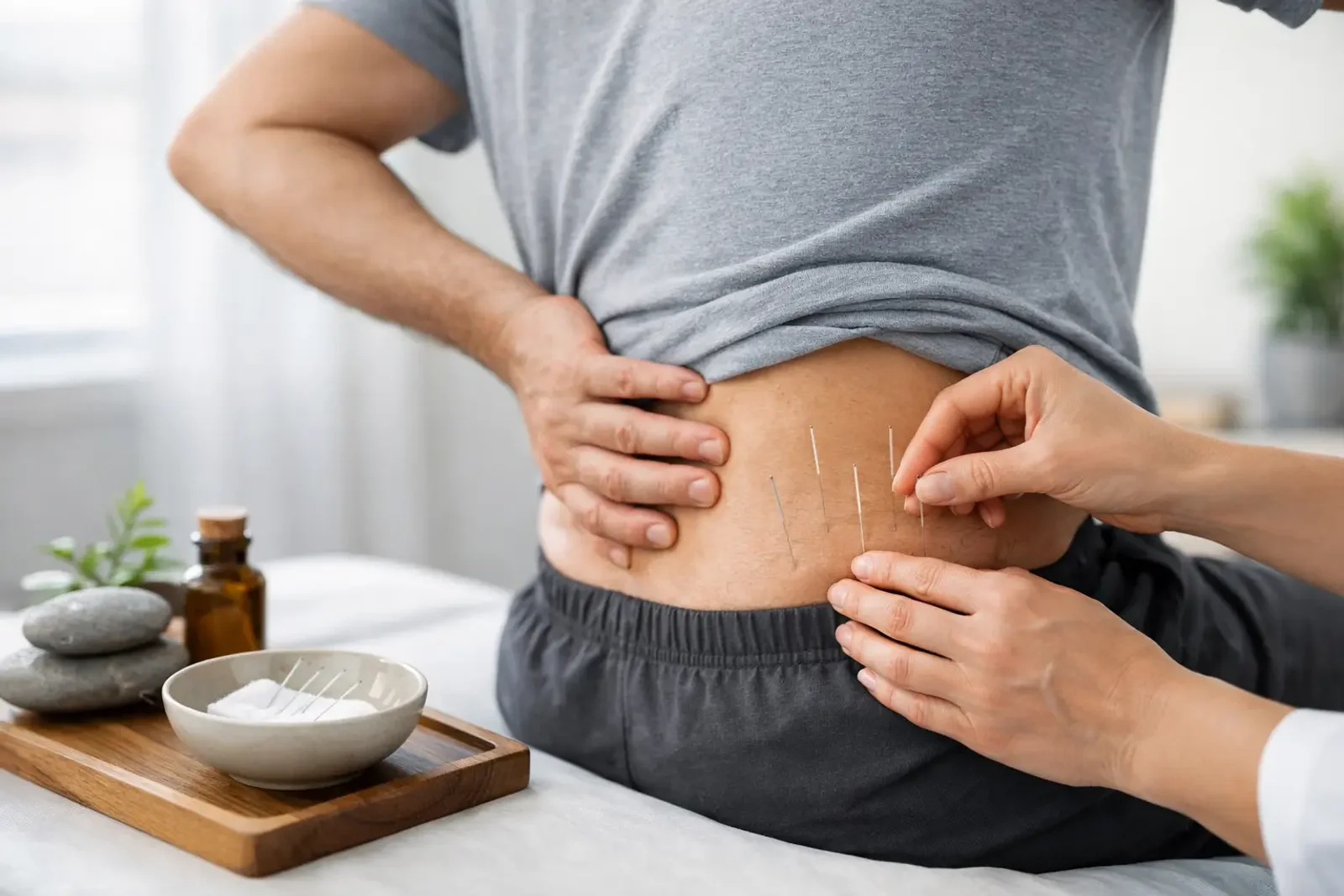
Sciatica has a way of taking over ordinary life. Sitting through a work meeting, driving, bending to put shoes on, even trying to sleep can become a negotiation with pain. If you are asking, does acupuncture help sciatica, the honest answer is yes, it can help some people - but it is rarely the whole answer on its own.
That matters because sciatica is not one single problem. It is a description of nerve-related pain, usually felt in the buttock and down the leg, often caused by irritation or compression of the sciatic nerve or the nerve roots that feed into it. Some people feel a sharp shooting pain. Others describe burning, tingling, numbness or weakness. The right treatment depends on what is driving those symptoms, how severe they are and how long they have been going on.
Does acupuncture help sciatica pain?
For many patients, acupuncture can reduce pain and muscle tension, which may make moving easier and daily activities more manageable. Some people notice relief quite quickly. Others find the effect builds over a few sessions. In practice, acupuncture is often most useful when sciatica is being aggravated by pain sensitivity, protective muscle spasm or difficulty settling an irritated area.
The research on acupuncture for sciatica is mixed but encouraging enough to justify considering it as part of a wider treatment plan. Studies suggest it may help with short-term pain relief and function in some cases, particularly when compared with doing very little. What the evidence does not show is that acupuncture reliably fixes every cause of sciatica or replaces a proper assessment.
That distinction is important. If a disc is irritating a nerve root, if spinal joints are stiff and inflamed, or if the tissues around the nerve are sensitive and tight, acupuncture may help calm symptoms. But if someone has significant nerve compression, progressive weakness or a condition that needs medical investigation, acupuncture should not be used as a substitute for diagnosis.
How acupuncture may work for sciatica
There is no need to make it mystical. In a musculoskeletal setting, acupuncture is often used as a practical pain management tool. Fine needles are inserted into specific points to help reduce pain, relax overactive muscles and influence the nervous system.
For sciatica, that may help in a few ways. It can encourage the release of natural pain-relieving chemicals, reduce local muscle guarding and lower sensitivity in irritated tissues. It may also help improve movement by making it easier to stand upright, walk more comfortably or tolerate exercises that were previously too sore.
This is one reason acupuncture can be a useful addition to physiotherapy. When pain is high, even sensible exercises can feel difficult. If acupuncture helps settle symptoms enough for you to move better, load the area more confidently and sleep more comfortably, it becomes part of a bigger recovery strategy rather than a stand-alone fix.
When acupuncture is more likely to help
Acupuncture tends to be more useful when sciatica is painful but stable, and when the main goal is to reduce symptoms so that normal movement and rehabilitation can start again. It can suit people with recent flare-ups, persistent leg pain with associated muscle tension, or those who have reached a point where pain is stopping progress.
It may also be worth considering if you are looking for a drug-free option to help manage symptoms, or if you have had partial improvement with physiotherapy and need another tool to help things settle.
The best results usually come when treatment is tailored. Sciatica can arise from the lower back, but pain can also be influenced by hip movement, gluteal muscle tension, posture, activity levels, deconditioning and how the nervous system is responding overall. A generic approach is rarely the best one.
When acupuncture may not be enough
There are situations where acupuncture is unlikely to be the main answer. If you have marked or worsening leg weakness, significant numbness, changes in bladder or bowel function, or severe unrelenting pain, those are red flags that need urgent medical assessment.
Even outside urgent situations, some patients need more than symptom relief. If the underlying issue is a disc problem that needs careful loading advice, a movement problem that keeps re-irritating the back, or a broader rehabilitation programme to rebuild strength and function, acupuncture should sit alongside that work rather than replace it.
This is where expert assessment matters. Two people can both say they have sciatica, yet need very different treatment plans. One may respond well to advice, exercise and a short course of acupuncture. Another may need a more structured rehabilitation programme, imaging review or onward referral.
What happens if you have acupuncture for sciatica?
At a specialist musculoskeletal clinic, acupuncture should never be offered in isolation without understanding the problem first. The appointment starts with assessment - where the pain is, what makes it worse, whether there is numbness or weakness, how the back is moving and whether the symptoms fit with sciatica or something else.
If acupuncture is appropriate, fine sterile needles are placed in carefully selected points. Depending on the presentation, these may be around the lower back, buttock, hip or leg. The treatment is usually well tolerated. Patients often describe a mild ache, warmth, heaviness or twitch in the muscle rather than sharp pain.
Sessions are typically brief and form part of a wider plan. You may also be given advice on sitting, walking, sleeping positions, pacing, mobility work and exercises to improve strength and control. That combination is usually more useful than relying on passive treatment alone.
Does acupuncture help sciatica long term?
It can help with symptom control, but long-term improvement depends on why the sciatica developed in the first place. If the pain settles but the back remains stiff, the hip remains weak, or your daily routine keeps provoking the problem, symptoms can return.
That is why longer-term success usually comes from combining short-term pain relief with the right rehabilitation. The aim is not simply to get through the week with less pain. It is to help you move with confidence again, return to work or exercise, and reduce the chance of repeated flare-ups.
A good treatment plan should adapt as you improve. Early on, the focus may be calming pain and irritation. Later, it may shift towards strength, flexibility, nerve mobility, walking tolerance and return to specific activities such as running, lifting or long drives.
Is acupuncture safe for sciatica?
For most people, acupuncture is safe when carried out by a properly trained clinician. Minor bruising, temporary soreness or a short-lived increase in symptoms can happen, but serious side effects are uncommon.
That said, it is not suitable for everyone. Some medical conditions, medications or stages of pregnancy may affect how treatment is planned. This is another reason why assessment and clear communication matter. You should know why it is being offered, what it is aiming to achieve and how it fits into your wider care.
The real question is not just whether it helps
A better question is whether it is the right tool for your type of sciatica, at this stage of your recovery. For some people, acupuncture is the thing that helps break the cycle of pain and muscle tension. For others, it offers only modest relief, and the bigger gains come from exercise, education and load management.
At Atlas Physiotherapy Clinic, that is exactly how we view it - as one option within a personalised treatment plan, guided by expert assessment rather than guesswork. If acupuncture is likely to help, it should have a clear purpose. If something else is more appropriate, that should be explained just as clearly.
If your sciatica is stopping you from sitting comfortably, walking normally or getting back to the activities you enjoy, the most useful next step is not chasing a miracle treatment. It is getting a clear diagnosis and a plan that makes sense for your body, your symptoms and your life.
Written by
Connor Jayes
Chartered physiotherapist · HCPC PH110273 · Atlas Physiotherapy Clinic, Faversham