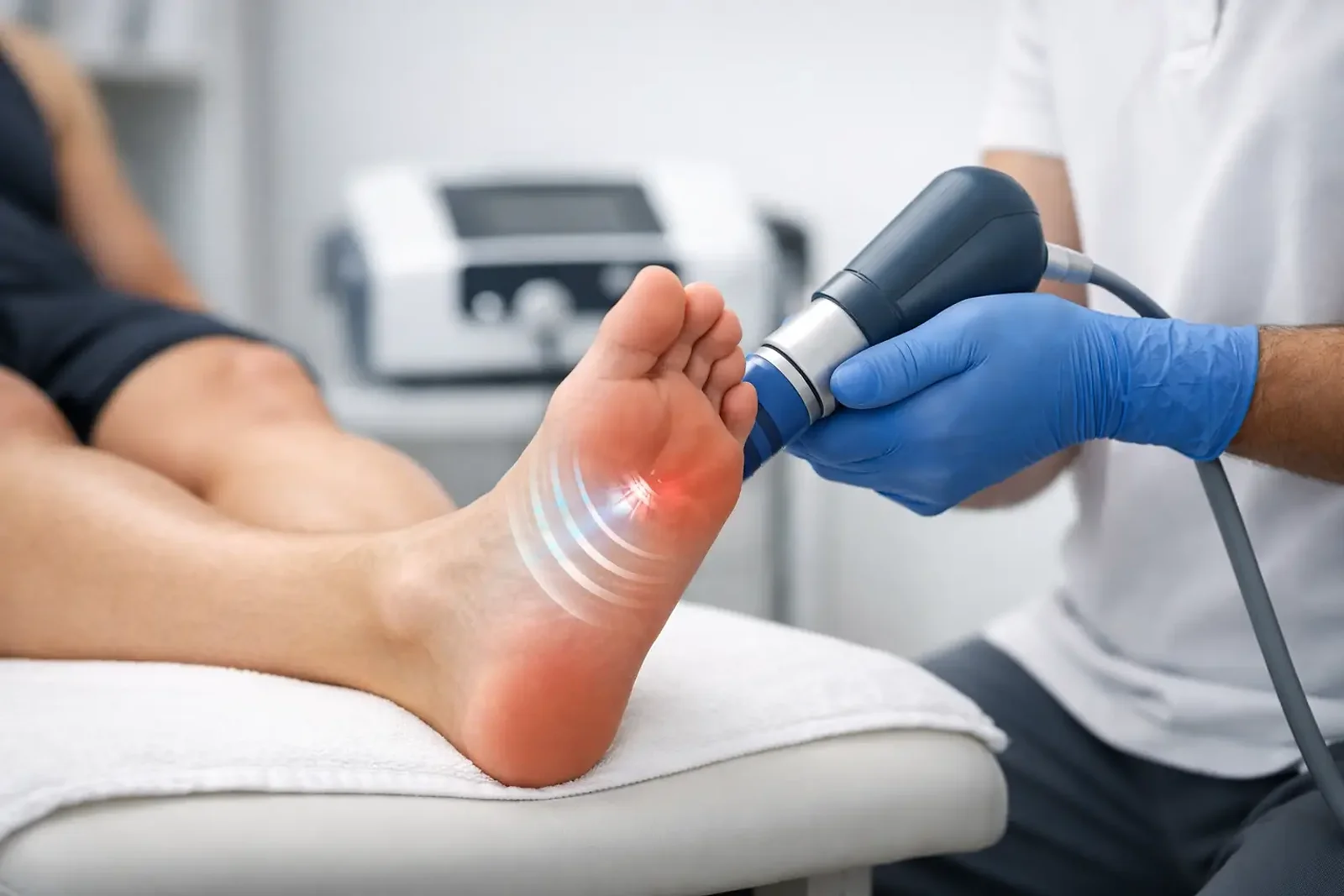
Morning heel pain that makes basic activities feel like a calculated risk often points to plantar fasciitis. When standard advice — rest, stretches, swap your shoes — has not been enough, shockwave therapy becomes worth considering for the heels that keep flaring up.
The condition develops when the plantar fascia, the band of tissue running along the sole of the foot, becomes irritated and overloaded. Effective treatment addresses both the pain and the underlying causes of the overload — not just the symptom on the morning the patient walks in.
What is shockwave therapy for plantar fasciitis?
Shockwave therapy uses controlled acoustic waves to stimulate healing in tissues that are slow to recover. Rather than trying to destroy tissue or mask discomfort, it encourages the body's natural healing response and improves local circulation.
It sits in the middle ground between basic physiotherapy and invasive options like surgery. It is particularly useful when heel pain has been there for months and has not responded to changing activity, switching footwear, and doing structured exercise.
When can shockwave help?
Shockwave is suited to persistent, chronic heel pain rather than recent-onset symptoms. Early management usually focuses on reducing aggravating loads and improving ankle and calf flexibility — and many people get better with that alone.
It becomes relevant for chronic presentations: heel pain lasting several months, recurring flare-ups, or pain that resurfaces every time activity ramps back up. Worth saying clearly though: not all heel pain is plantar fasciitis. Nerve irritation, fat-pad irritation, referred pain from the lower back, and inflammatory conditions can all mimic it.
Why assessment matters before treatment
A painful heel is a symptom, not a diagnosis. A proper assessment looks at where the pain is, how long it has been there, what aggravates it, walking patterns, ankle mobility, and how much load the foot tolerates.
Wider contributors get checked too: running volume, prolonged standing at work, sudden footwear changes, weight gain, reduced ankle mobility, recovery after illness. Missing those is what produces the pattern of treatment that helps for a few weeks then the problem returns.
At specialist clinics shockwave is typically integrated into a personalised plan rather than offered as a standalone service.
What does the treatment feel like?
Shockwave involves a tapping or pulsing sensation over the painful heel area. The intensity is adjustable and tolerable for most patients.
Sessions are short. After assessment and confirmation of the area, gel is applied and the device delivered to the heel. Most people resume normal daily activity straight away, though a brief period of soreness is common afterwards. That short-term sensitivity is not a complication — it reflects the tissue being stimulated.
How many sessions are usually needed?
Frequency varies based on individual factors and how long symptoms have been present. Typical courses are several sessions over a few weeks rather than a single appointment.
Improvement is not always immediate. Some patients notice a change after the first sessions, others see gradual progress. Understanding the timeline matters — six-month-old heel pain is unlikely to normalise within days. The progress signs that matter: less morning pain, longer walking tolerance, quicker recovery after activity.
Shockwave works best alongside a plan
A common misconception is that the device does all the work. The most effective results come from combining shockwave with appropriate rehabilitation: calf strengthening, foot loading exercises, activity pacing, and footwear advice.
Taping or temporary orthotic support can help manage symptoms while strength improves. Work that involves prolonged standing needs a realistic accommodation, not assumed rest. If the foot is being overloaded the same amount week after week, progress will plateau no matter how diligently the exercises are done.
Who is a good candidate?
Good candidates typically have confirmed plantar fasciitis or plantar heel pain that has not responded to guided conservative management. Active people who want a non-injection, non-surgical option often do well with it.
Suitable presentations: localised heel pain worse on the first steps, aggravated by prolonged standing or walking, persisting despite appropriate self-care. Less suitable: an alternative diagnosis, highly inflammatory symptoms, or a medical contraindication.
Expert assessment matters here — appropriate care means matching the right treatment to the right problem at the right time.
What outcomes can you realistically expect?
Most people want to walk comfortably, get back to exercise, and stop thinking about every step. Those are reasonable goals, and shockwave can move them in the right direction — particularly for stubborn cases. It can reduce pain, improve standing tolerance, build training confidence, and ease the morning first-step pain.
It cannot, however, instantly fix every contributing factor. Response varies. Some people respond excellently; others improve modestly and continue with rehabilitation; a smaller group may not respond enough and need a different conversation. That is the treatment matching the problem, not failure.
Choosing treatment with confidence
Prolonged heel pain often produces scattered treatment attempts with no clear direction. Shockwave is a worthwhile option once the diagnosis is confirmed and it is integrated into a broader plan.
At Atlas Physiotherapy Clinic, the assessment looks at pain, movement, daily demands, and personal goals so the treatment suits both the diagnosis and the life around it. Understanding what is causing the heel pain and what the recovery plan looks like is what makes resuming normal activity feel genuinely achievable.
Heel pain is stubborn, but it does not have to be permanent. Treated at the right point, those first morning steps can be comfortable again.
Written by
Connor Jayes
Chartered physiotherapist · HCPC PH110273 · Atlas Physiotherapy Clinic, Faversham